
|
At running events, team events and public company activities, clothing becomes a mobile brand surface. Yet it often stops at a standard shirt with a logo — and loses impact exactly where visibility should actually begin.
|
Many companies invest a lot of time, money and energy into events where they want to present themselves as active, modern and team-oriented. Running events are a good example: thousands of participants, many spectators, strong images, social media reach and a team that becomes visible together.
That is exactly why it stands out how little thought often goes into the clothing.
Different colors, different logos, different companies — and in the end almost always the same approach: a standard shirt from a catalogue, printed, done. That is not fundamentally wrong. But it is surprisingly little for a stage the company has created for itself.
Because real visibility does not begin where a logo is printed.
It begins where clothing is understood as part of the brand.
At a well-attended event, clothing is more than just clothing. It appears in team photos, videos, social media posts, among many people and often long after the event in internal and external communication.
That makes it a massive opportunity.
A logo on a shirt mainly says one thing:
We were there too.
Real Corporate Fashion can do more. It can show what a company stands for, how it treats its team and what level of ambition it has for its own brand. It can create belonging, build recognition and make sure a company does not simply appear, but is actually noticed.
Because being visible is easy.
Being remembered is the real task.
Many events are known months in advance. Participants are organized, budgets are planned, internal communication is prepared, photos and posts are considered.
Only the clothing often ends up at the very bottom of the list.
Then something quickly available is ordered: a functional shirt from a catalogue, company logo added, done. The problem is rarely the budget. Most of the time, it is a blind spot in planning.
Because when a company puts a lot of energy into an event, but leaves the most visible surface of the day interchangeable, it wastes part of its own investment.
It is like booking a billboard on a busy road — and then placing the poster on the back side, facing the wall where nobody can see it.
The space has been paid for.
The visibility has still been wasted.
A standard shirt with print can make a group recognizable. For a short-term activity, that may be enough. But for a planned appearance with brand ambition, it is usually too little.
Because these shirts are often not developed for the company. They are only marked with its logo. They have no distinct handwriting, hardly differ from other teams and often disappear back into the wardrobe after the event.
That means the impact ends exactly where it could actually continue.
Anyone who wants to be visible at an event should therefore not only ask:
What do we need for this one day?
But rather:
What can this clothing do for our brand beyond this one day?
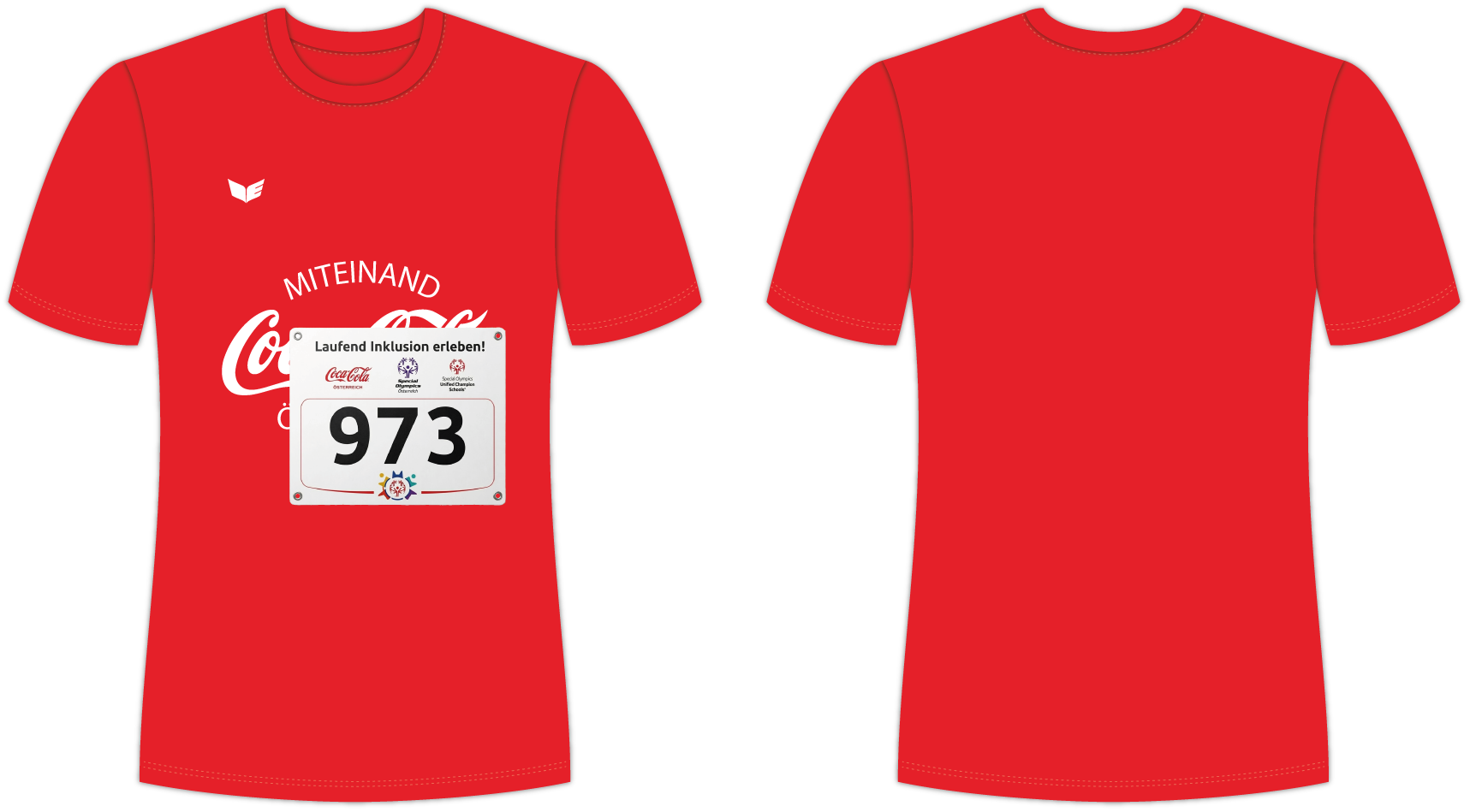
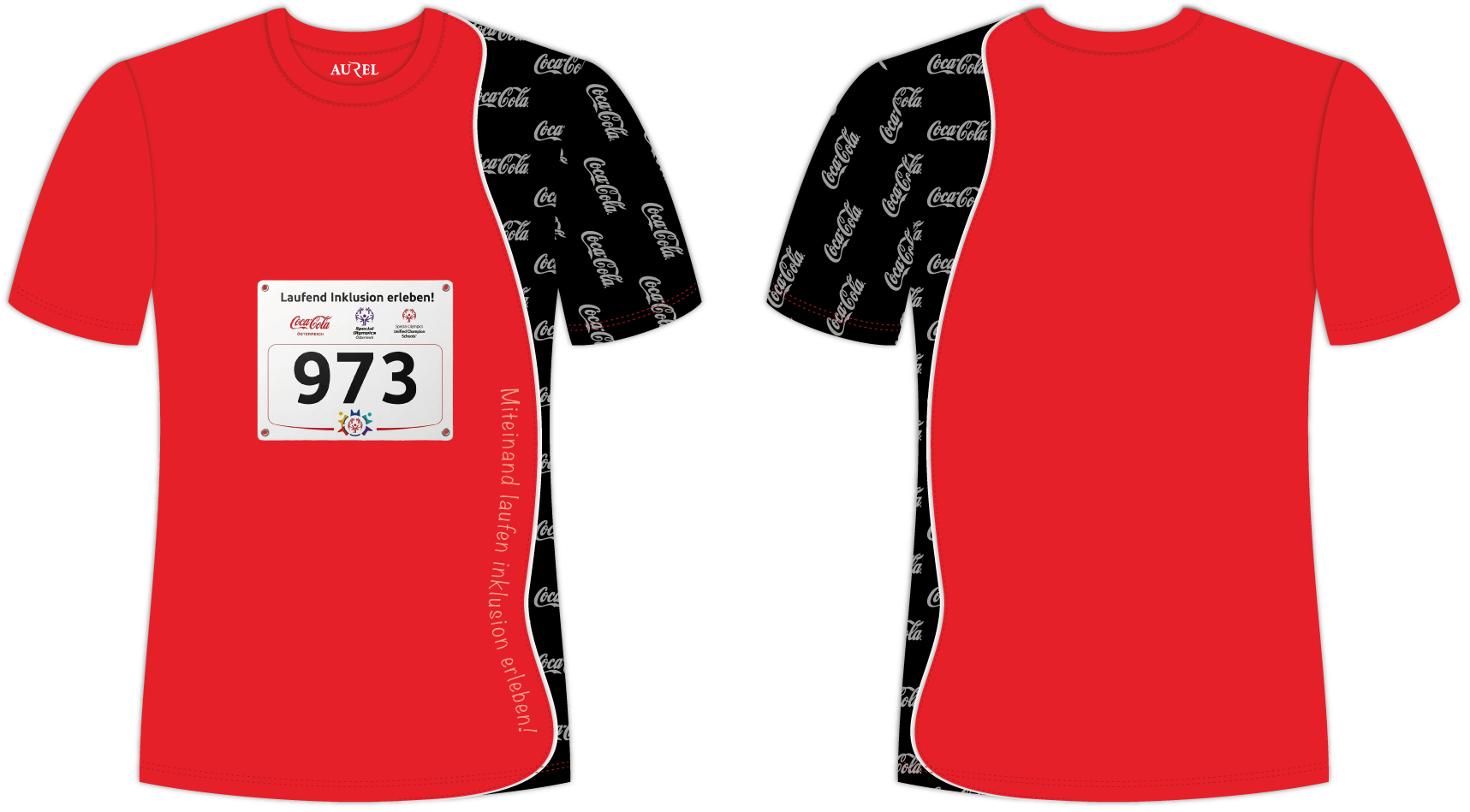
Both versions carry a logo. Only one of them carries the brand forward.
Individually developed event clothing does not end with print. That is where it really begins.
It is about colors that fit the brand. Cuts that fit properly. Materials that match the movement and the occasion. Details that create recognition. And a design strong enough that people still want to wear the piece after the event.
That is the difference between printed clothing and real Corporate Fashion.
Not every company needs a completely new collection for every event. But wherever many eyes, many photos and many repetitions are involved, clothing should not be treated as one final task on a checklist.
It is part of the appearance.
And therefore part of the brand strategy.
Event clothing does not only have an external effect. It also says something to the team.
Giving employees a well-designed garment shows appreciation. Not through big words, but through something worn directly on the body. Employees notice very clearly whether they are merely being used as walking advertising space or whether someone has thought about how they appear, how they feel and whether the garment still has value after the event.
Especially at events that are meant to show team spirit, belonging and company culture, that matters.
Because when a company wants to show the outside world how strong its team is, the clothing should not tell the opposite story.
Many companies invest a lot of money and energy to be visible at events. That makes it even more surprising how often they choose the smallest possible idea when it comes to clothing.
And yet this is exactly where a major opportunity lies: not just to participate, but to become recognizable. Not just to show a logo, but to show attitude. Not just to hand out clothing for one day, but to create long-term brand impact.
Real visibility does not begin with print. It begins with the idea behind it.”
Visibility does not happen where only a logo is placed, but where clothing is understood as part of the brand.
Companies that want to show more than mere presence at events should not start with the print. They should start with the question of what effect the clothing should have on the team, the company and the brand.
Read more

If your clothing feels interchangeable, the problem is usually not the textile alone. What is missing is a clear system of brand, cut, material, function and impact.
For companies that do not see clothing
as standard goods, but as part of their identity.